Addressing the Rattlesnake in the Room

Updated: Jan 19
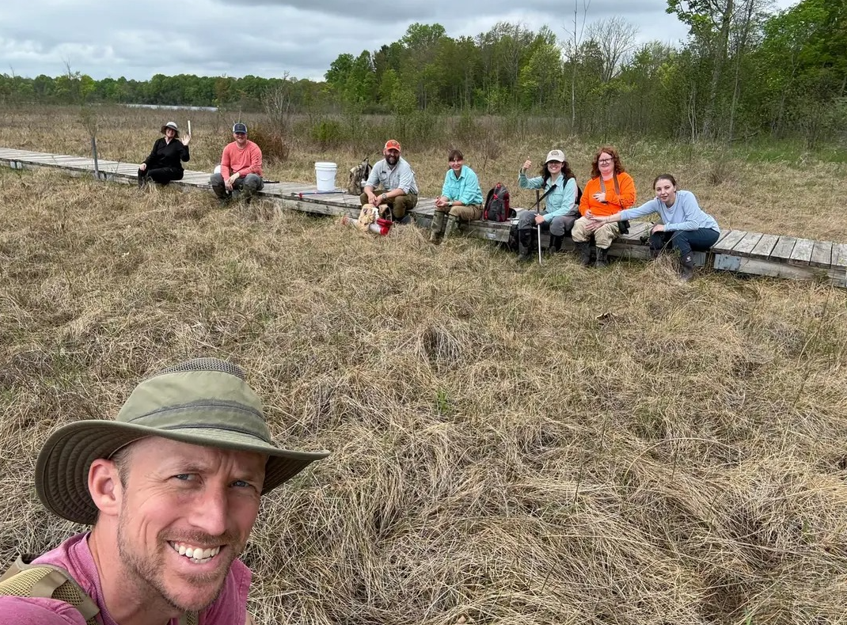
Last week we met with our friend Mitch Lettow, Stewardship Director at the Southwest Michigan Land Conservancy (SWMLC), to plan our upcoming field season and talk about all things rattlesnake! Yes, rattlesnakes are in Michigan, and they're on our top list of priorities for conservation. Here's a little bit about why, and some filling in on the conservation efforts we're already undertaking.
First, a lot of background...

More than half of all U.S. adults have some level of fear around snakes, and more when it comes to venomous ones. It's one of the most common fears humans have, right up there with fear of heights and fear of public speaking. There's a whole bunch of reasons for that - our primate brains are wired to be reactive to snakes, and that wiring quickly and easily causes very different feelings depending on what people around us taught us about snakes - either directly or through their own reactions. If you grew up not often exposed to snakes or around people who are afraid of them, chances are you'll have been conditioned to be afraid as well. If you grew up with positive experiences around snakes, that wiring may have resulted in a deep fascination and appreciation. Either way, fear of snakes tops the list of Americans' fears.

Snakes are also the least deserving of fear of any animal I know of. They're shy and never territorial, even with each other. They always try to hide or flee when confronted, knowing that giant predators like us can easily kill them with just a casual stomp of a foot. They only bite as a last resort, when they feel they can't escape. And for most snakes those bites are nothing to be concerned about - their teeth barely exist and cause far less damage than a kitten, with a much lower risk of infection. Compared to the animals we more commonly keep as pets like dogs, cats, hamsters, etc. - animals that are actually territorial and can cause deep, significant tissue damage, bleeding, or even death - snakes just shouldn't be a concern.
Snakes are an important part of our ecosystem - our home - and are model citizens in our natural community. For one, they control rodent populations more effectively than many other predators, being able to follow rodent scent trails directly to their nests and make clean work at eliminating them in tight spaces where other predators like birds, foxes, or cats cannot. Aside from causing property damage and spreading diseases to humans directly, rodents also spread ticks more efficiently than any other mammals. And with those comes Lyme and a whole bunch of other tick-borne illnesses that cause far more human deaths than snakes ever could.
Snakes are also predators and prey, creating an important link in the food chain supporting birds, mammals, and marsupials. This link helps the ecosystem to recycle energy through life-death cycles, keeping our home livable.
Rattlesnakes in particular also provide benefits to humans that other snakes do not. Their venom is full of proteins that can have a wide range of effects on mammals. In the case of a bite, that's not great news. But for treating human illnesses it's a priceless pharmacy. Integrilin, which is derived from Dusky Pygmy Rattlesnake venom, is a blood thinner that is essential for open-heart surgeries, angioplasty/stenting, and heart attack patients. Contortrostatin - a protein derived from copperhead snakes - has been shown to reduce human breast cancer tissue grown on mice by more than 70%, and will likely be heading to human trials once production and delivery systems are sorted out. Other proteins derived from snake venoms have been used to treat chronic pain by either temporarily shutting down nerve activity without the addictive side effects from drugs like Morphine or Fentanyl, or by permanently shutting down nerve activity for chronic pain from severe injuries and amputations. And snake venom research for medical applications is still just getting started. The fewer rattlesnakes, the less the genetic diversity, and a greater chance we will have lost a priceless protein.

And rattlesnakes are no different from other snakes as far as temperament. They prefer to hide or flee, only biting when they can't escape. One recent study had a researcher stepping on more than 175 rattlesnakes with a fake leg and significant pressure to see if they would bite, and only six did. Bear in mind this is a leg with clothing and actual human scent, and warmed by the desert heat. Six out of 175 snakes is a 3.4% chance a rattlesnake will try to bite you if you freakin' step on it. An older study with cottonmouths found the same thing - around 10% would try to bite if stepped on, and none tried to bite someone who was just standing next to them. And all venomous snakes are capable of controlling their venom - regardless of age - and many times their bites have no venom at all. It's for their prey, not for you.
Our Work
So, rattlesnakes are not keen on biting, they provide a lot of benefits to humans and the wider natural community, so what are we doing with them?
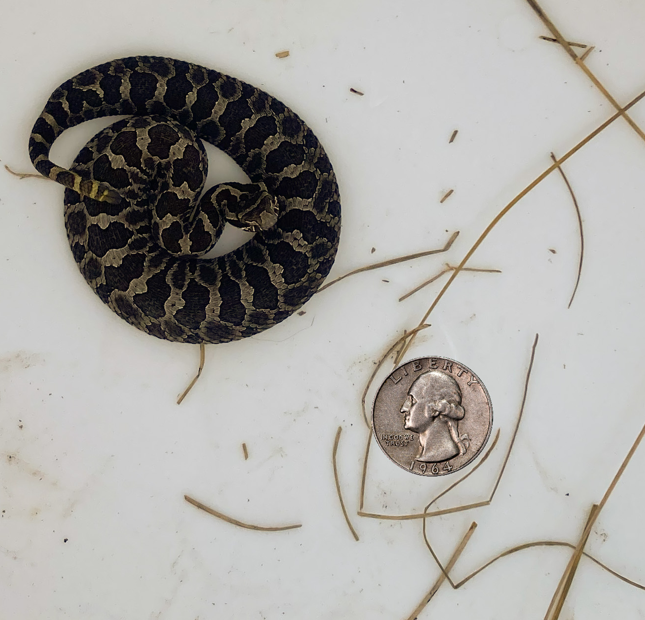
Eastern Massasauga Rattlesnakes (EMRs) are a small, shy, wetland-loving species that are federally 'threatened' and listed as 'threatened' or 'endangered' in every state they can still be found. They're disappearing quickly due to human persecution, wetland loss and habitat destruction, and inbreeding. They can't move across highways, fields, suburbs, and urban areas to other nearby populations, so they eventually end up breeding with close relatives over and over again, and this leaves them at risk of chronic genetic defects and susceptible to disease. A recent paper published in the Proceedings of the National Academy of Sciences highlighted the risk and revealed the need to help separated populations reconnect if we want to keep this species around.
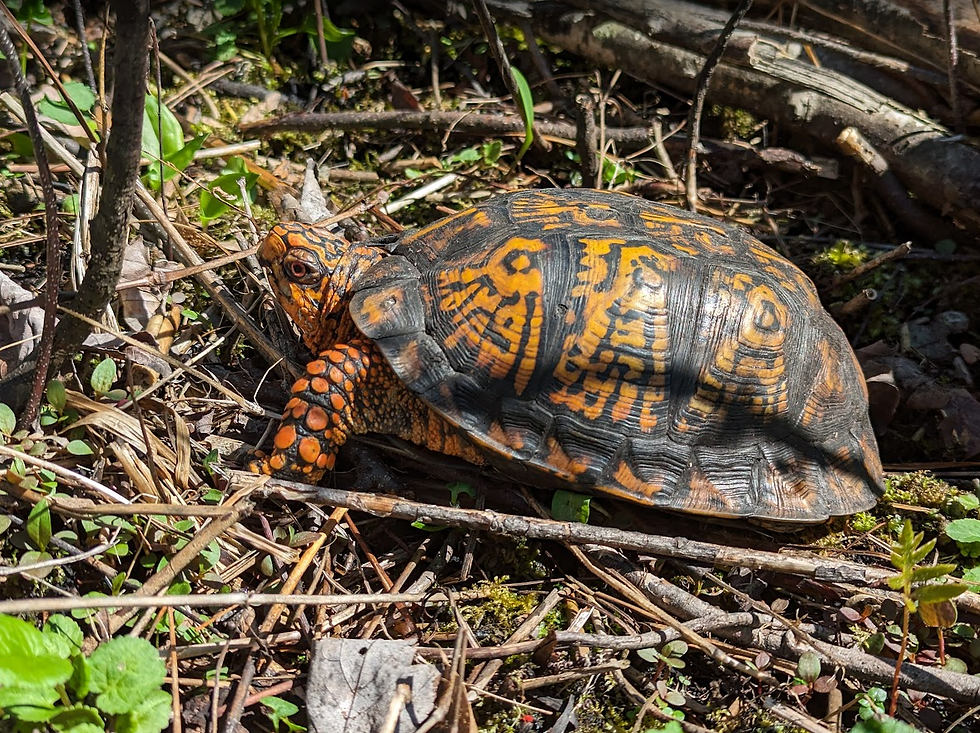
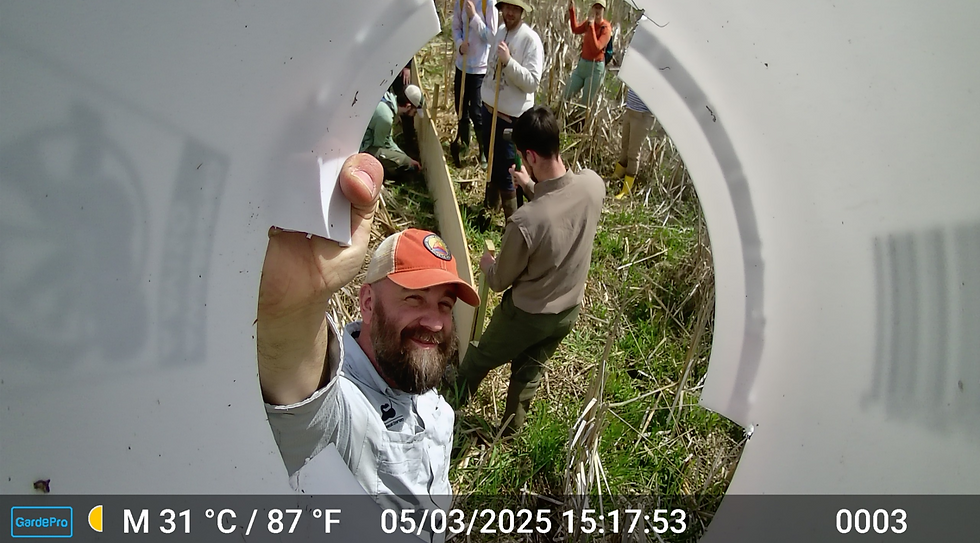
For starters, we've been helping the Southwest Michigan Land Conservancy survey for EMRs on their preserves. There are thousands of acres to cover, and they really don't have the staff available to undertake the effort. But knowing where EMRs are, when, and how many can help them make decisions about how best to improve habitats, and which ones need special attention. Plus, we also run across a lot of other rare species that can use the help, like Eastern Box Turtles. One of the best tools for this, apart from sheer search effort, is the Adapted Hunt Drift Fence Technique, or AHDriFT. We set up low fences that force animals of all kinds to walk along the fence until they walk underneath a camera fastened inside an upside-down bucket. Since the cameras are solar-charged, we can leave them out for the entire season.


This year, we're joining a massive effort to help survey for and reconnect two populations of EMR in Cass County, Michigan, alongside researchers from West Virginia University, Lincoln Park Zoo, and Michigan State University. We'll continue what we worked on last spring - collecting blood samples from as many as we can to see how genetically different the two populations are and whether or not they're interbreeding at all.
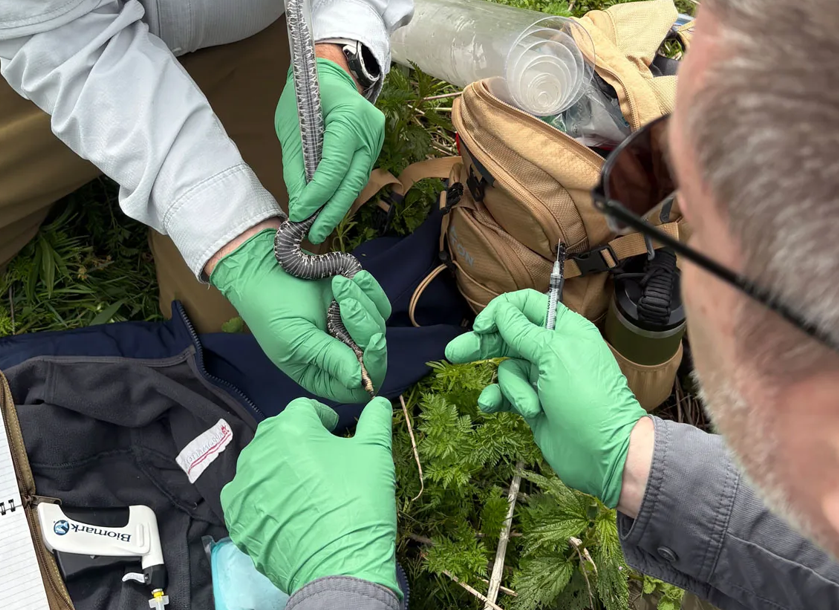
Then, we'll help construct and monitor a wildlife corridor connecting the two populations, and take genetic samples again years later to see how the wildlife corridor changed their breeding patterns. It's an exciting effort, and there's plenty of room for friends to come help us out - EMRs are hard to find, and the more people we have helping the more likely we are to meet our goal of 30 individuals. Plus, this restoration project will benefit so many other species that share the habitat, including turtles, cool-water stream fish, and wetland birds.
Looking Forward
We're ready to go for the spring and will be posting dates for surveys and habitat restoration activities soon. We'll also need help setting up AHDriFT cameras, and possibly setting up other equipment like radio receivers in the field. Our time and effort in the field, as well as our equipment, is funded by you - by attending our events, donating, or giving your own time and sweat, you make this kind of work possible. So from all of us, thank you!
For more fascinating reading on snakes, check out Stephen Hall's new book, "Slither: How Nature's Most Maligned Creatures Illuminate Our World."