"Partnerships are the only way we get things done..."

Last month we had the pleasure of hosting Emily and Ed from Snake Discovery on one of our Eastern Massasauga monitoring trips. For those not in the know, Snake Discovery is a Minnesota-based zoo that has developed one of the more popular reptile-focused channels on YouTube. Most of their content focuses on husbandry and zoo goings-on, delivered in a wholesome, family-friendly way that appeals to both general audiences and herp enthusiasts alike. I had the fortune to run into both of them at the 2025 Biology of the Pit Vipers symposium in Rodeo, NM and invited them to join us on one of our research trips if ever they found the time.
Apart from just being kind, incredible people, there are practical reasons for inviting non-researchers on a research trip. The academic and agency worlds of conservation are insular communities, and frankly we can be out of touch and dismissive of the general public as we become more absorbed in the work we're passionate about. In doing so, we routinely make few crucial mistakes. We start to view ourselves as the only stewards and protectors of these species and habitats. We start to think that because we have questions, we alone have the right to be in these wild spaces - after all, nothing's more important for the survival of the species than trying to determine the effect of diel cycles on foraging behavior, right?
Not only does the general public have just as much right to wild spaces as we do, they already use these spaces more often than than us and outnumber us 1000 to 1. Therefore, positive changes means we need the researchers, the general public, the herpers, the birders, the wildlife enthusiasts, et al to all be rowing in the same general direction. Concepts and connections that are obvious to us in the conservation world aren't necessarily apparent to others. As a community-based organization, we've found that involving interested members of the public in our work has been far more effective at communicating conservation messages than preaching, which often triggers defensiveness (e.g. how dare they say that my actions are the problem! In fact, it's the so-called 'experts' who are the real problem!) or outright obstinance (e.g. you say that I can't do this?! Joke's on you buddy. I'm going to do it even harder!)

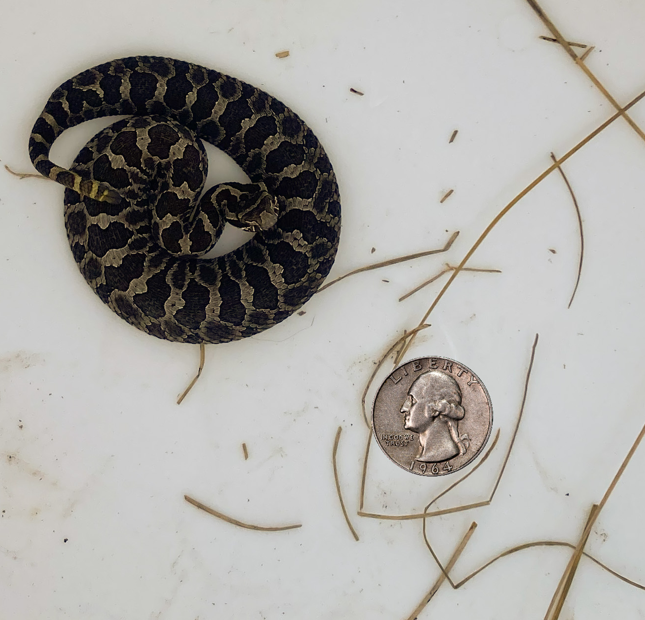
It's one thing to tell someone that off-trail visits are damaging the habitat. It's another to have them out on a research trip and show them the sedges that have been trampled into a mud pit and the invasive autumn olive moving in. It's one thing to tell someone they need to disinfect their gear when entering and leaving the habitat. It's another thing to show them a snake that has been zombified with fungal disease. You get the idea.
Content creators like Emily and Ed are experts at showing - at visual storytelling - and that's no small gift. Having them along also means messaging that would have previously only reached the small slice of the conservation world that follows our content is now reaching beyond our conservation community to the millions of herp enthusiasts whose support and involvement we need. That's what working together can achieve. And that's why partnerships are so important.